A First Visit, Forty-Five Years in the Making: Gurudev in Romania
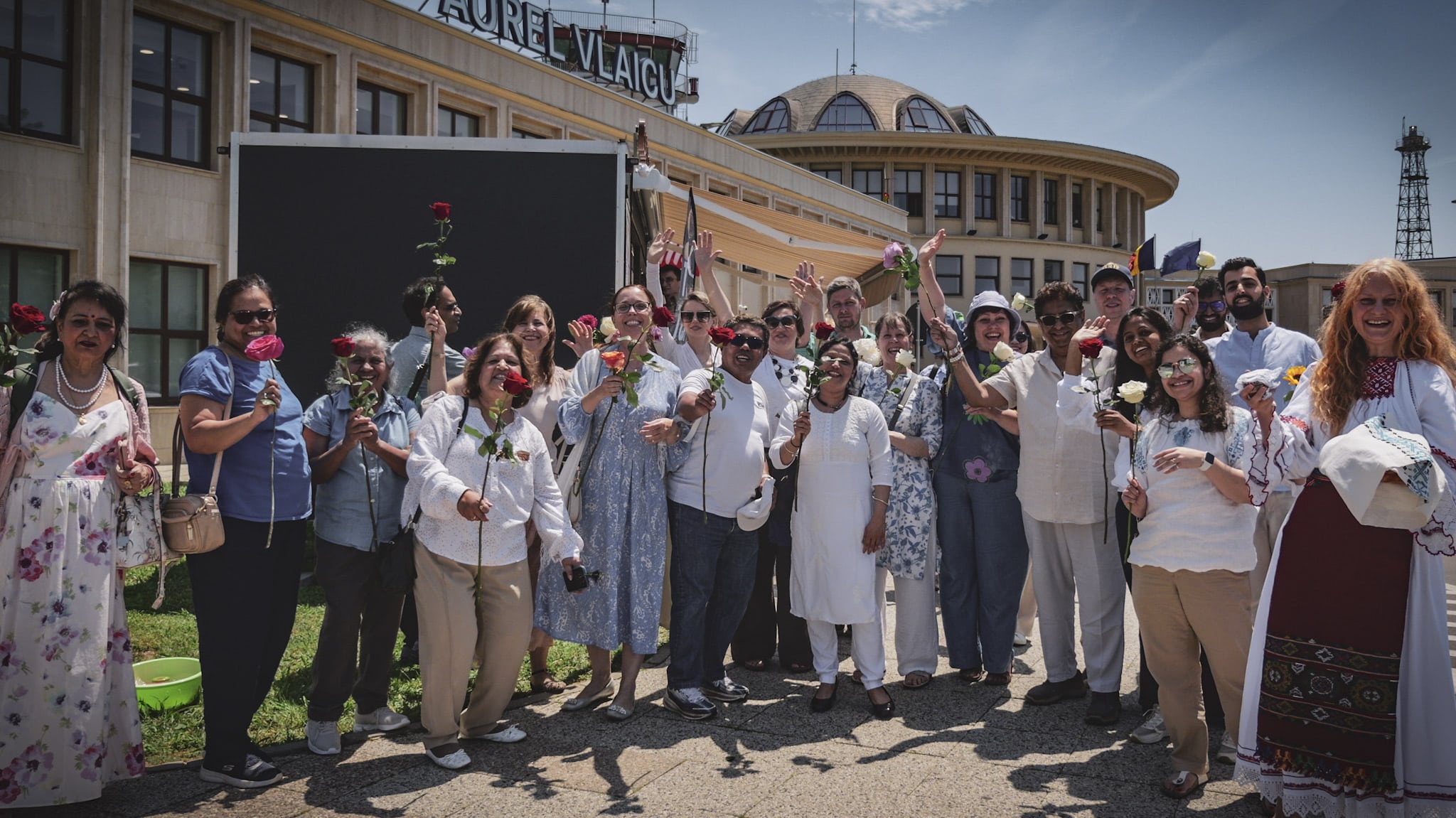
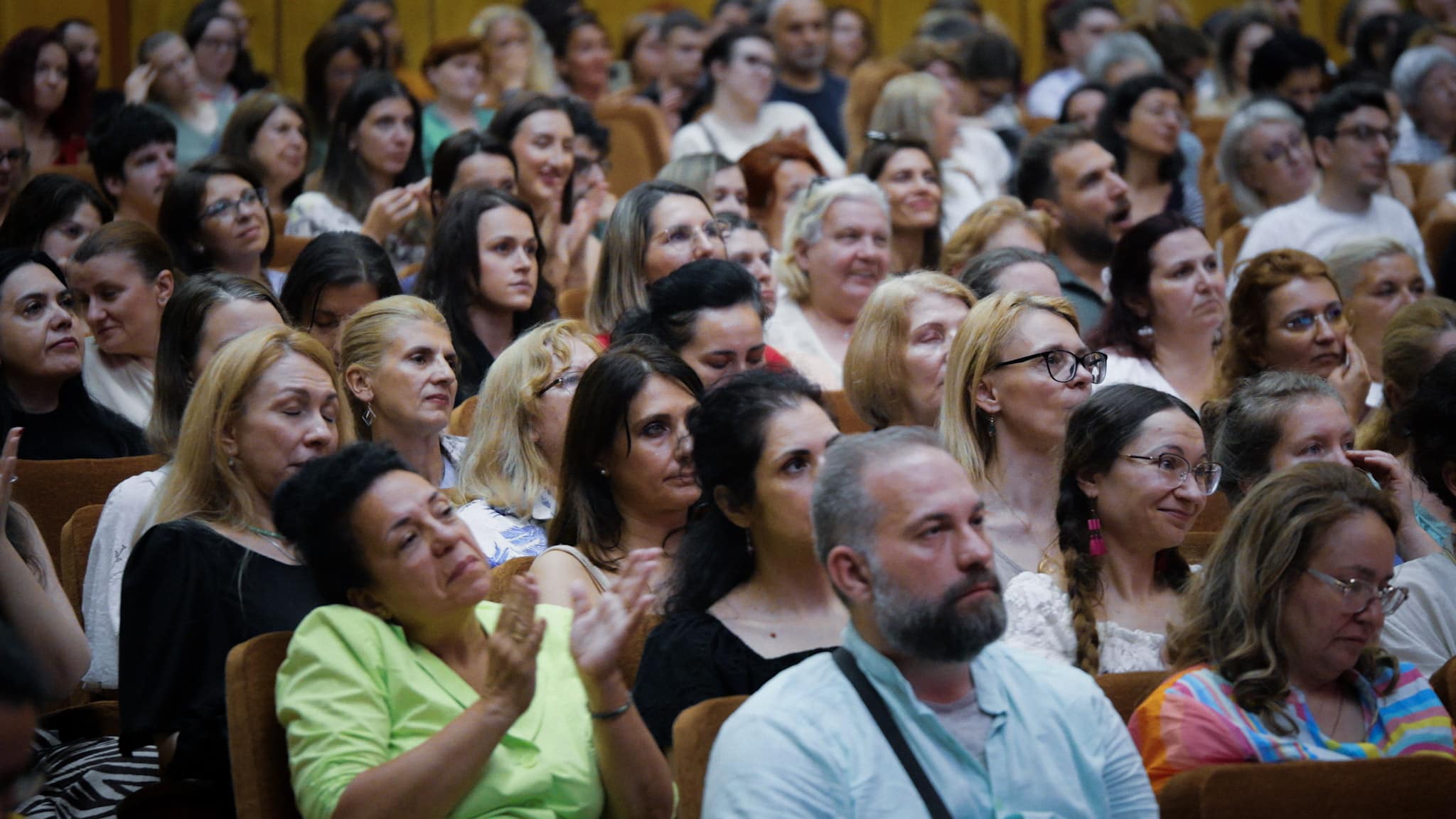
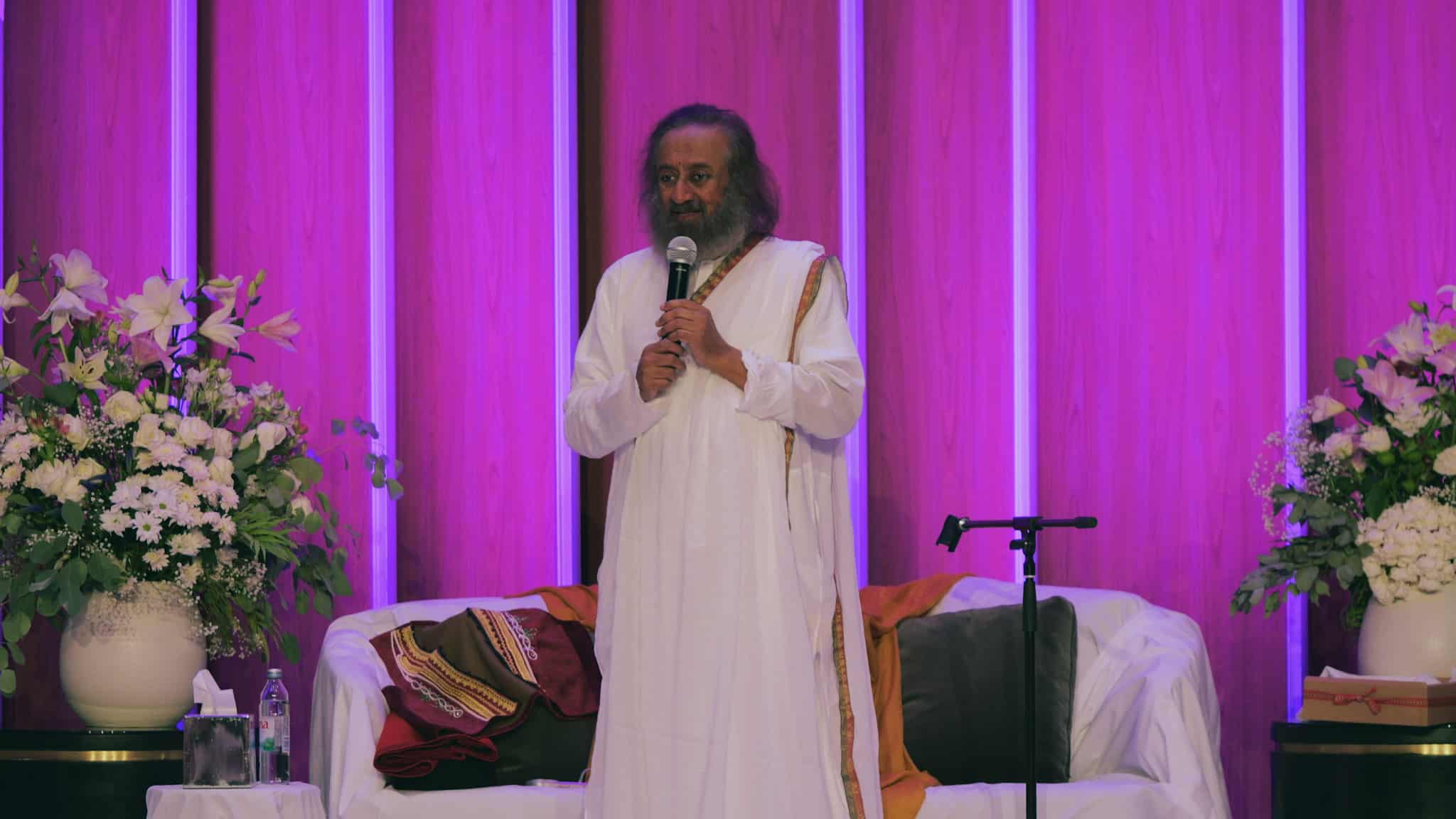
Romania had never received Gurudev. And yet the hall was full. Four thousand people gathered at one of Bucharest’s most iconic venues to hear a teaching on the human mind — and to ask, through their presence, the question that brought Gurudev across three countries in five days: is inner peace something that can actually be learned?
June 11–16, 2026
Bucharest, Romania · Skopje, North Macedonia


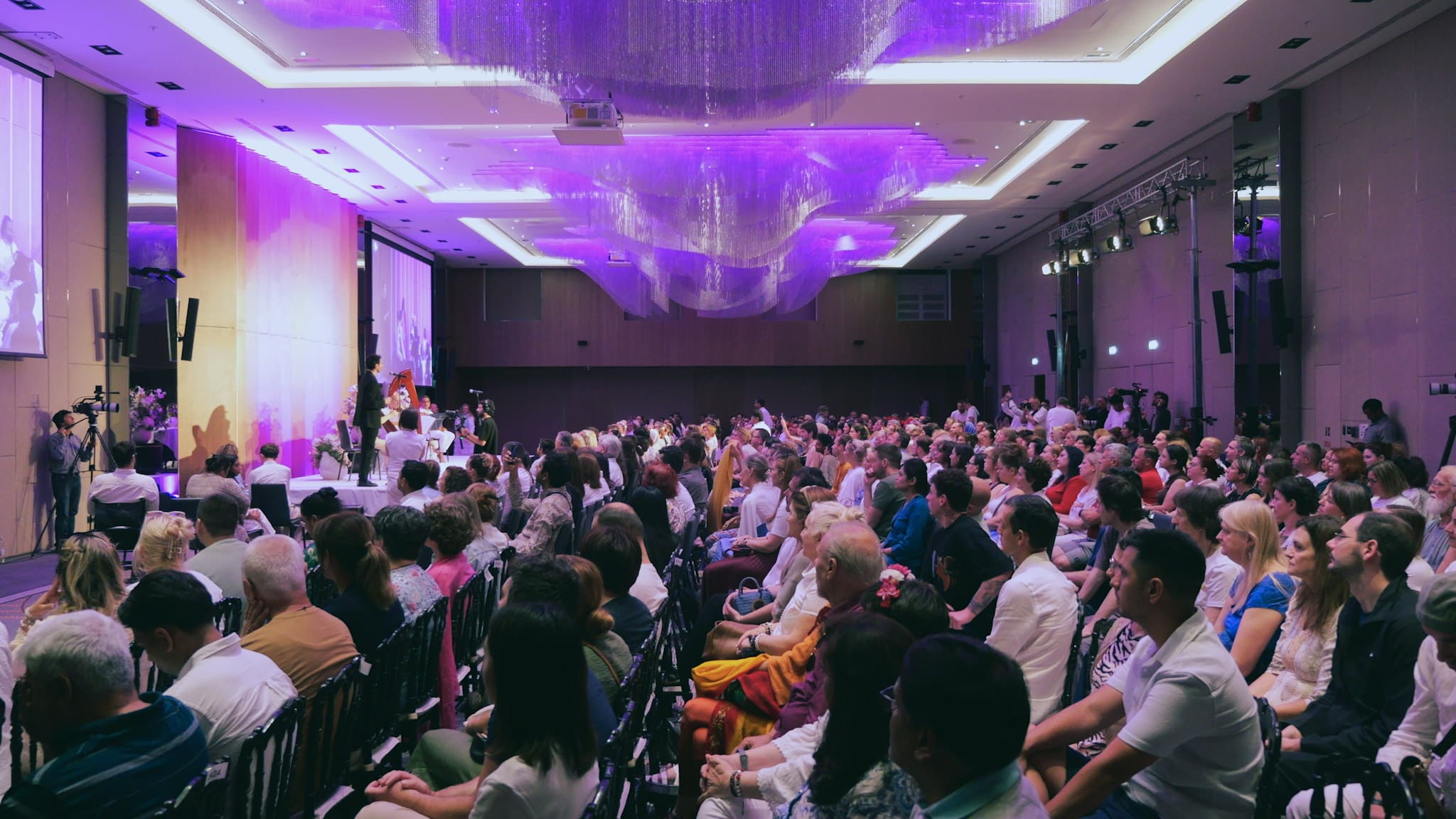
4,000 at Sala Palatului, Bucharest
One of Romania’s most celebrated venues — home to concerts, summits, and state occasions — filled for Gurudev’s first-ever visit to the country, for a public talk on managing the mind and emotions.

Skopje: A City Opens
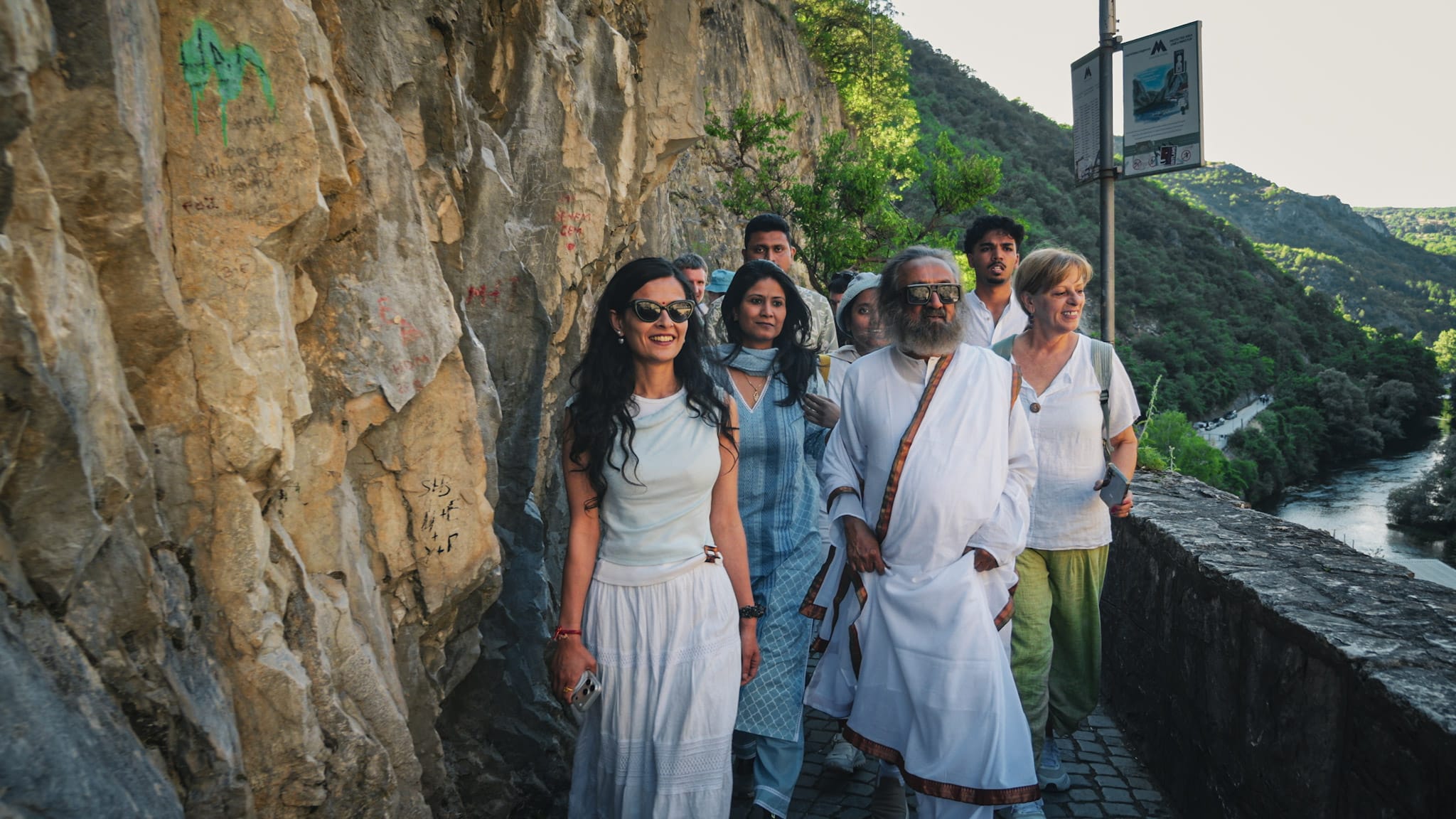
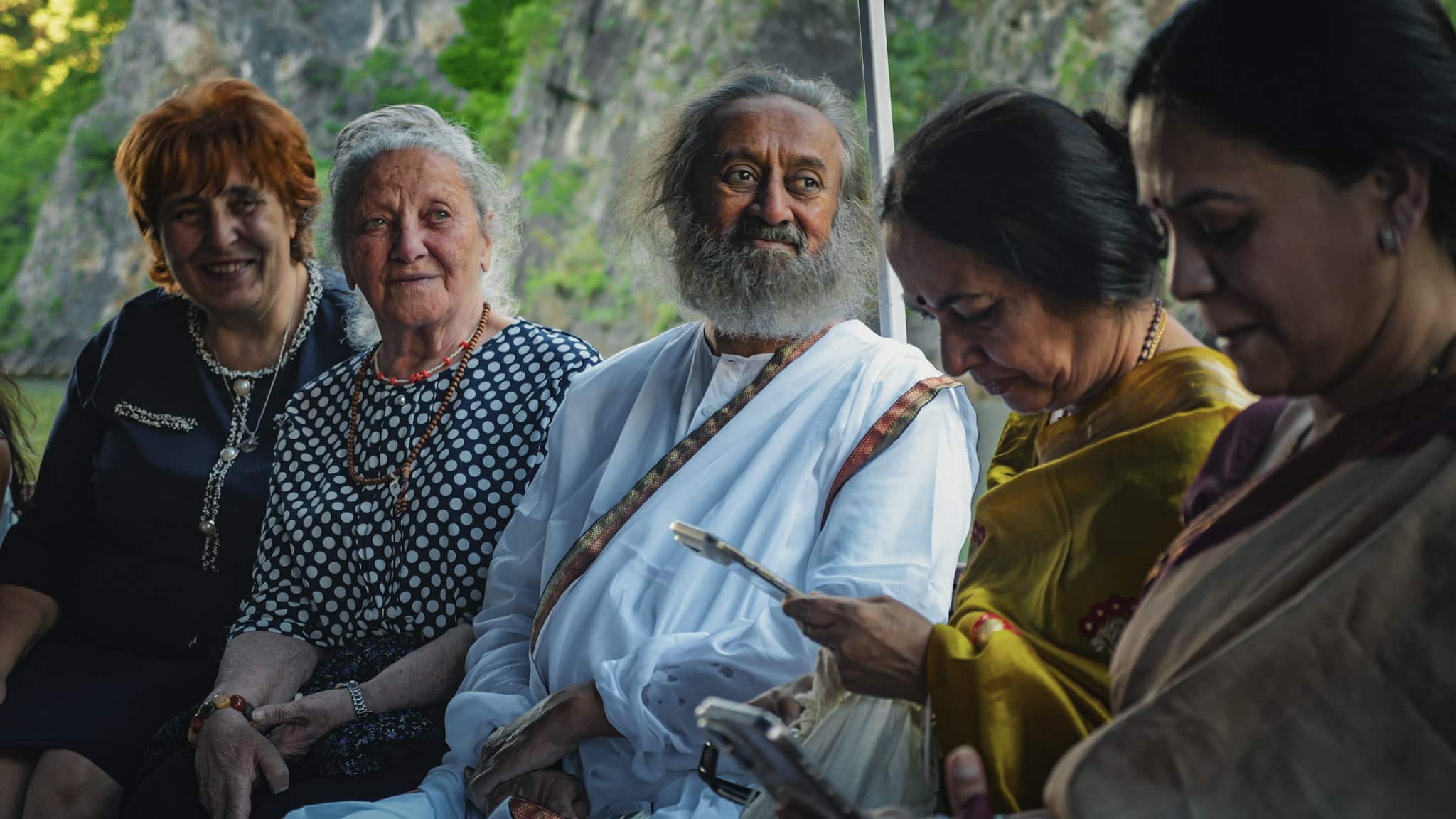
A full hall at the Marriott, a night walk through the old bazaar, three boats on the emerald waters of Matka Canyon — North Macedonia welcomed Gurudev with the warmth of a community that has waited a long time.

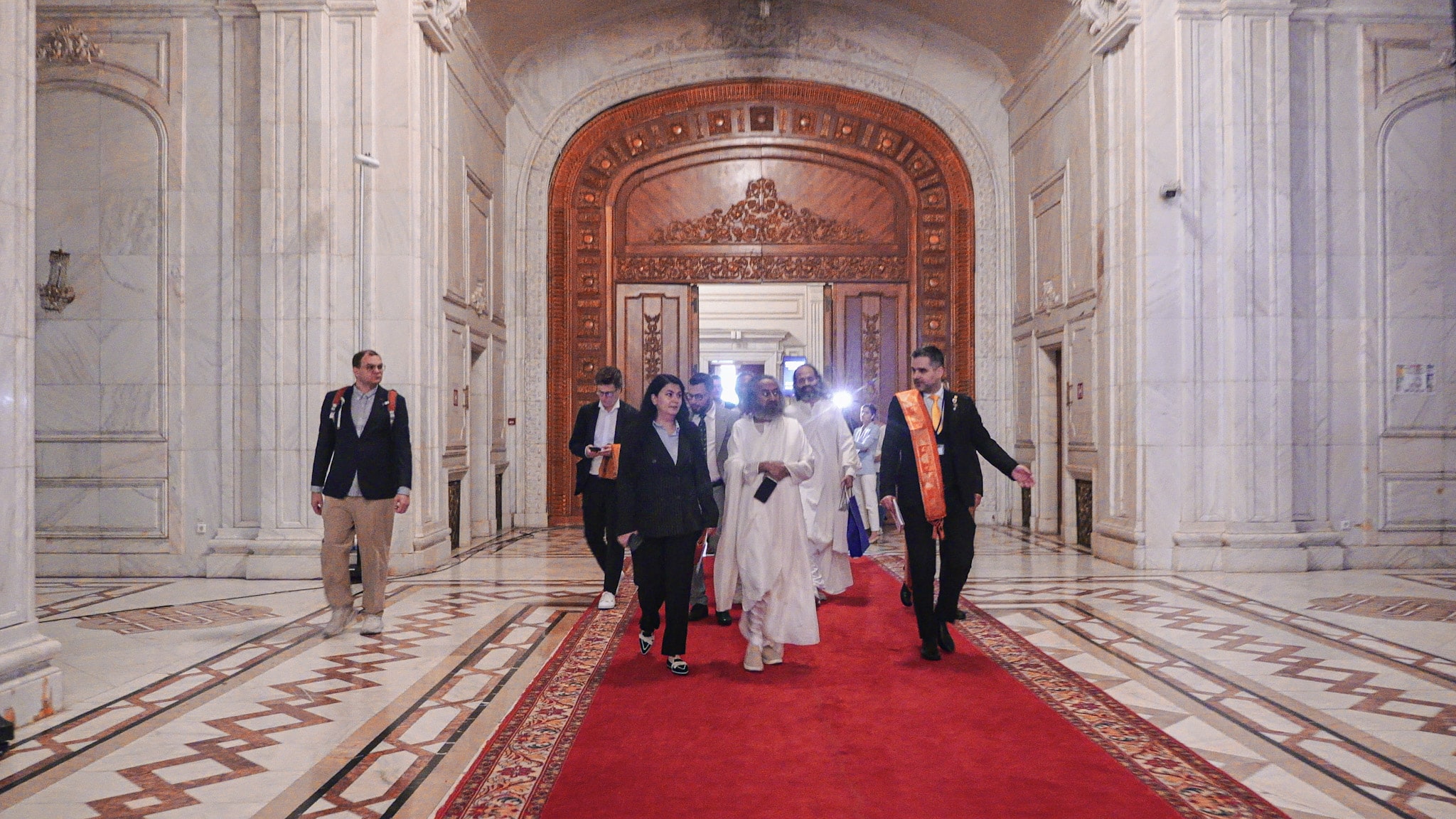
A Meeting at the Romanian Parliament
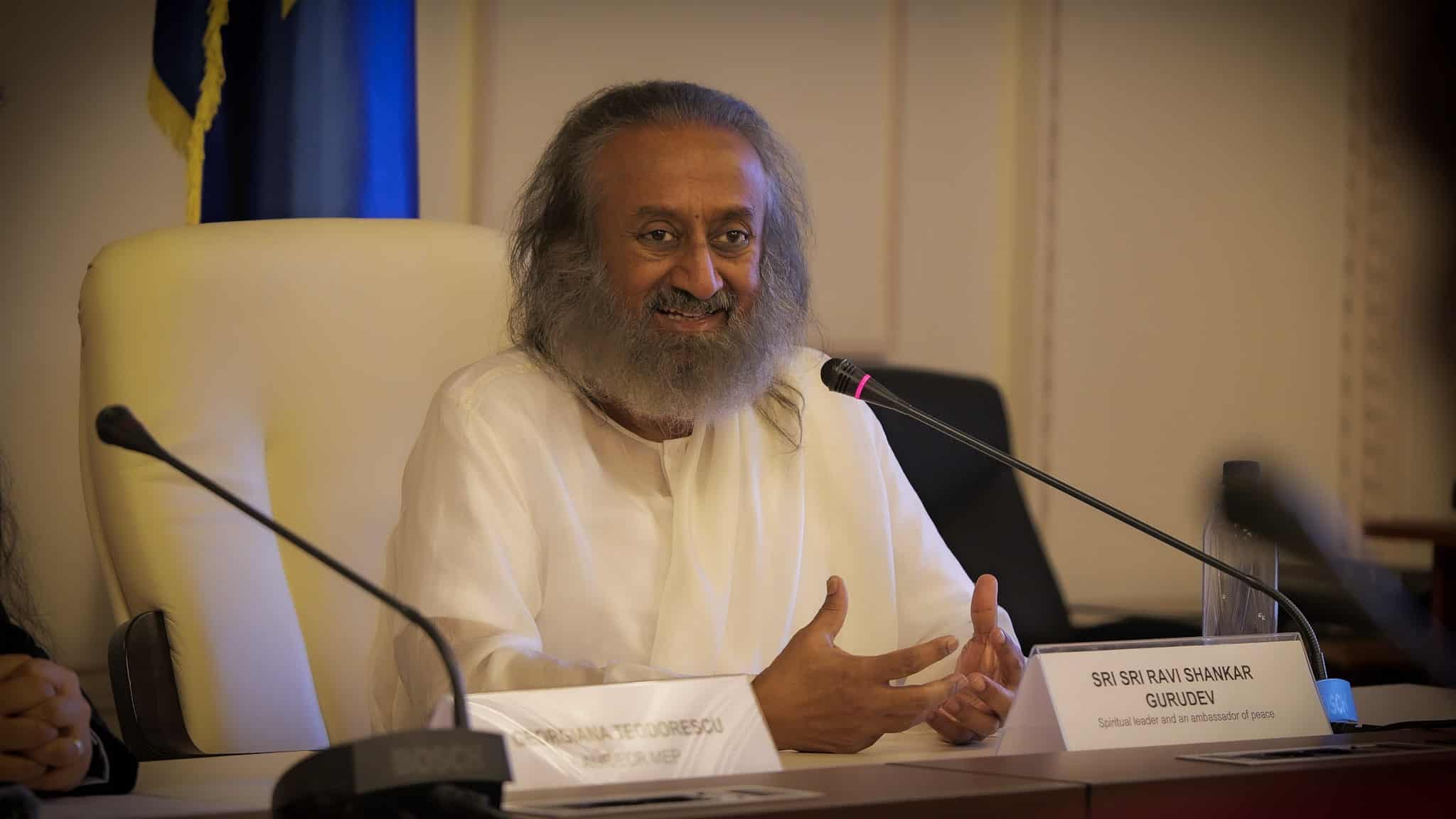
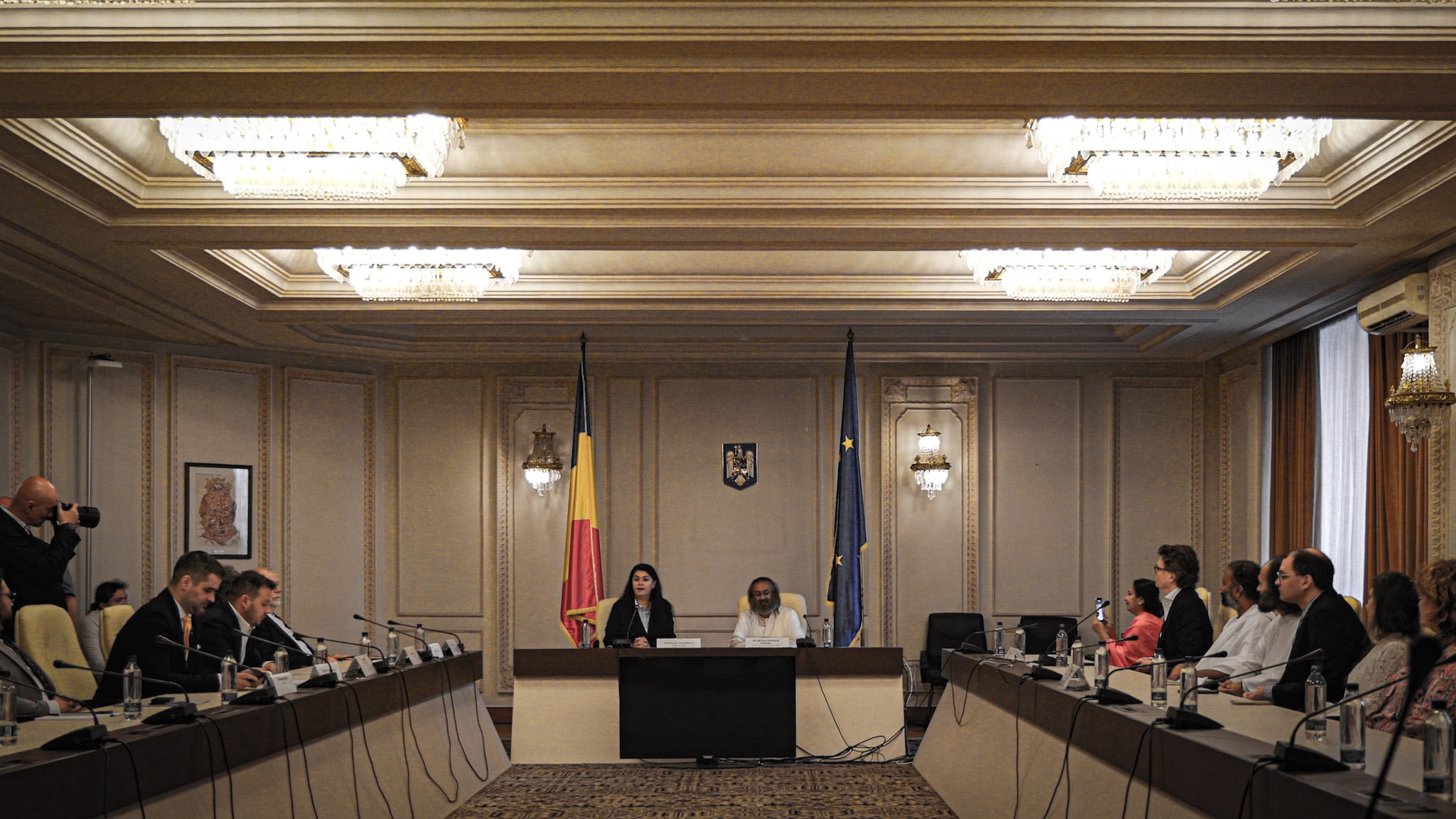
Inside the grand chambers of the Parliament of Romania, parliamentarians and officials gathered for a private exchange.
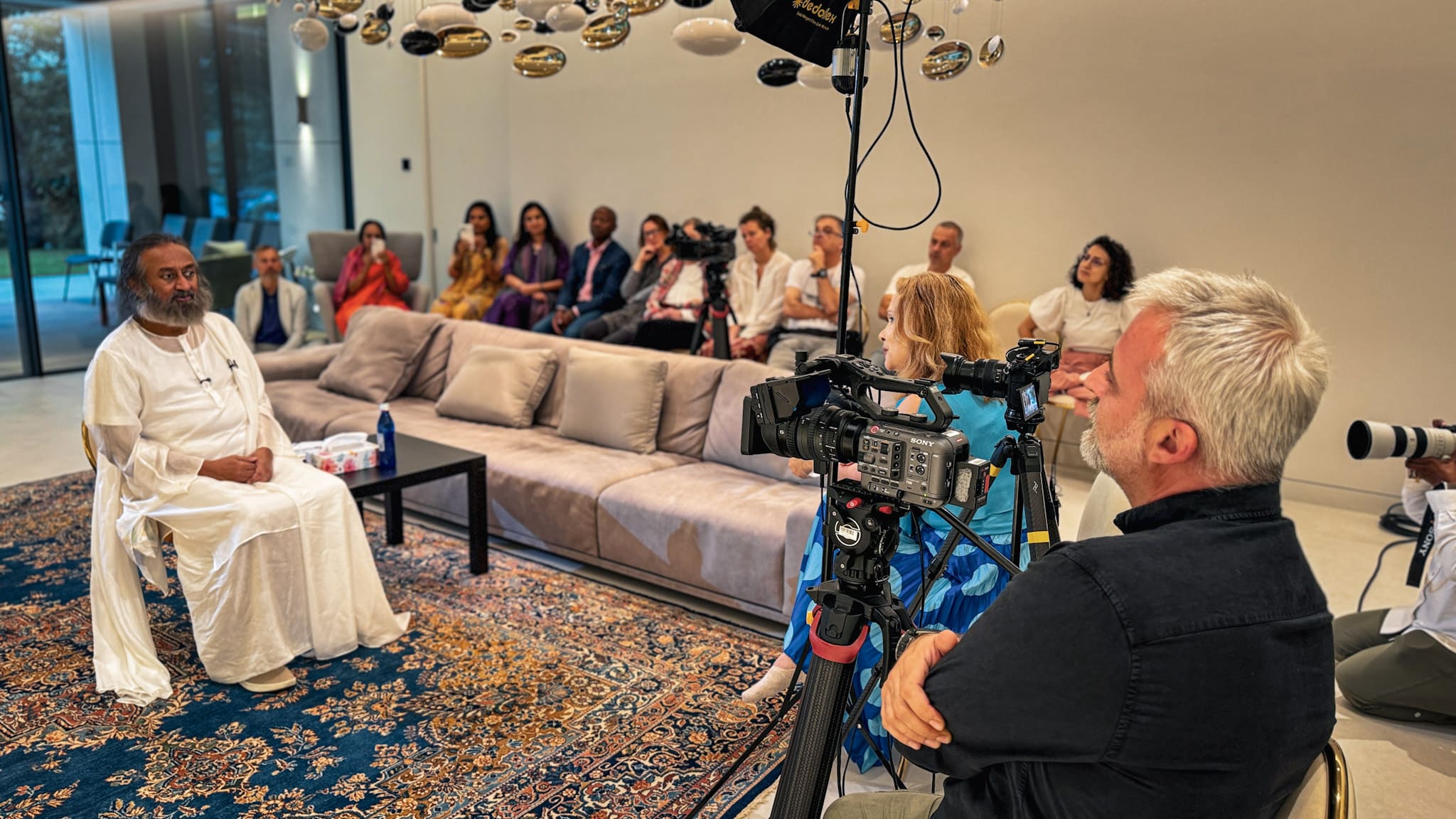
The Romanian interviewer framed it precisely. “You are coming to a country where for 45 years, the communists tried to abolish inner life. And you have been doing Art of Living for 45 years.”
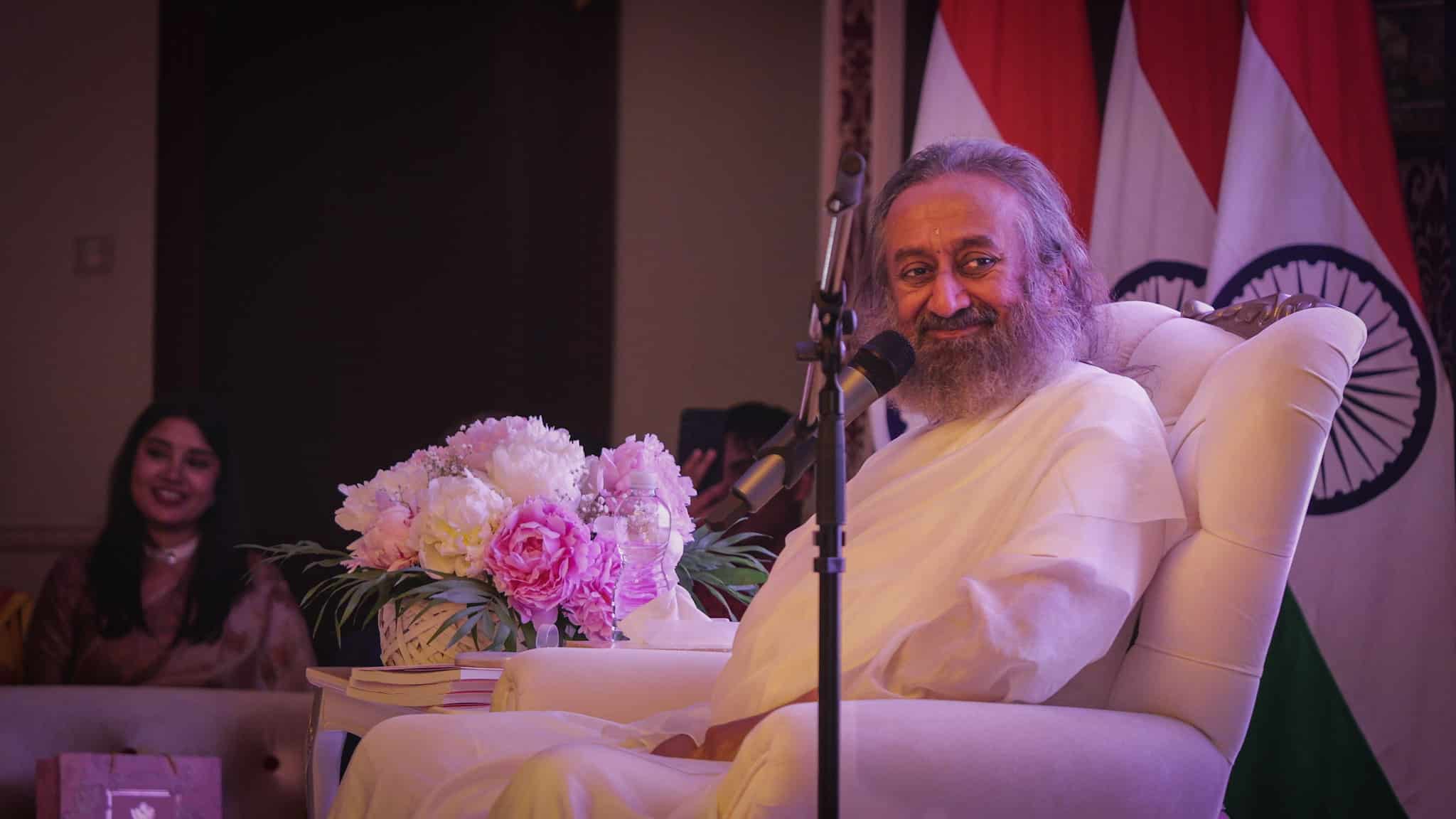
Gurudev acknowledged the symmetry. “Though I’m very late to coming to Romania, I’m happy that I could make it.”
At Sala Palatului on the evening of June 11, he made up for the delay. Over 4,000 people came for a talk on how to manage the mind and emotions — a subject that sounds almost technical until Gurudev speaks about it, at which point it becomes personal. He explained what stress actually is: suppressed emotion with nowhere to go. He described what the breath knows that the mind does not. He talked about the swing between aggression and depression that is hollowing out a generation, not just in Romania, but everywhere. And he offered something specific: that the tools to address this are learnable, teachable, and already proven across more than 150 universities in the United States, 70 in Europe, and over a thousand institutions across India.
“Today, when there is so much tension, uncertainty, and a sort of gloomy atmosphere,” he said, “it is all the more necessary for us to bring inner peace.”
The next morning, he carried the same message into a different room. Inside the Romanian Parliament, in a chamber of gilded ceilings and national flags, parliamentarians listened as Gurudev spoke about what it actually takes to lead under pressure. One of them offered a welcome that cut to the heart of the visit:
“While we read about these things in books, we have Gurudev here, who is actually building such a change every day, through every person with whom he works.”
It came up in the interview. It always comes up.
A Romanian podcaster asked him directly: you’ve been to St. Petersburg, you’ve worked in Colombia, in Kashmir, in Sri Lanka — take me into the room. What do you actually say to people who are at war?
Gurudev’s answer was characteristically simple. “It’s not what you say. It’s what you are that makes a difference.”
He traced this back to Colombia. The FARC had refused engagement with the European Union, with the United States, with others who had tried. After Gurudev met with their leadership in 2015, they announced a unilateral ceasefire and a commitment to the Gandhian principles of nonviolence — a shift that contributed to the 2016 peace accords after 52 years of civil war. The media asked him: what did you say? “I said, ‘It’s not what you say,'” he recalled. “‘If you are calm, if you are peaceful, you can transmit that vibration to others.'”
Peace, on this account, is not a negotiating position. It is a state of being. And states are contagious.
For Romania, a country living in the shadow of a war and working through its own history of suppression, that was not an abstract idea. It was a practical one. Communication breaks down when there is no trust, Gurudev said. Trust breaks down when there is perceived threat. And perceived threat multiplies in an agitated mind. “An agitated person cannot create peace around them.”
The solution, he said, is not philosophical. It is physiological. The breath is the link between the body and the mind, and it can be worked with. “Just ten minutes of breathing techniques can help you. It brings focus and clarity.” Over 200 research studies have now examined the relationship between breathing, meditation, and mental health. The science, Gurudev noted, has caught up with what the ancients understood.
From Bucharest, Gurudev moved to Skopje — a city of cobblestones, a grand arch, and a square named for one of history’s most ambitious conquerors. He spoke at the Marriott to a full hall, on a subject the venue’s name does nothing to suggest: all that you want to know about life.
After the talk, he walked. Through Alexander the Great Square, past the grand arch, into the old bazaar — devotees alongside him, the city lit up in the evening. It was not planned as a media moment. It looked like joy.
The following afternoon brought Matka Canyon: thirty minutes from the city, ancient cliffs above emerald water, three boats carrying 150 people into a silence that the landscape seemed to have been keeping for centuries. Gurudev was in the middle of it. Laughter, stillness, the last of the light.

Continue your happiness journey with Gurudev’s highly-rated meditation app. Sattva offers guided meditations, wisdom teachings, and practical techniques to enhance your daily wellbeing.
Download Sattva App


SOLUTION