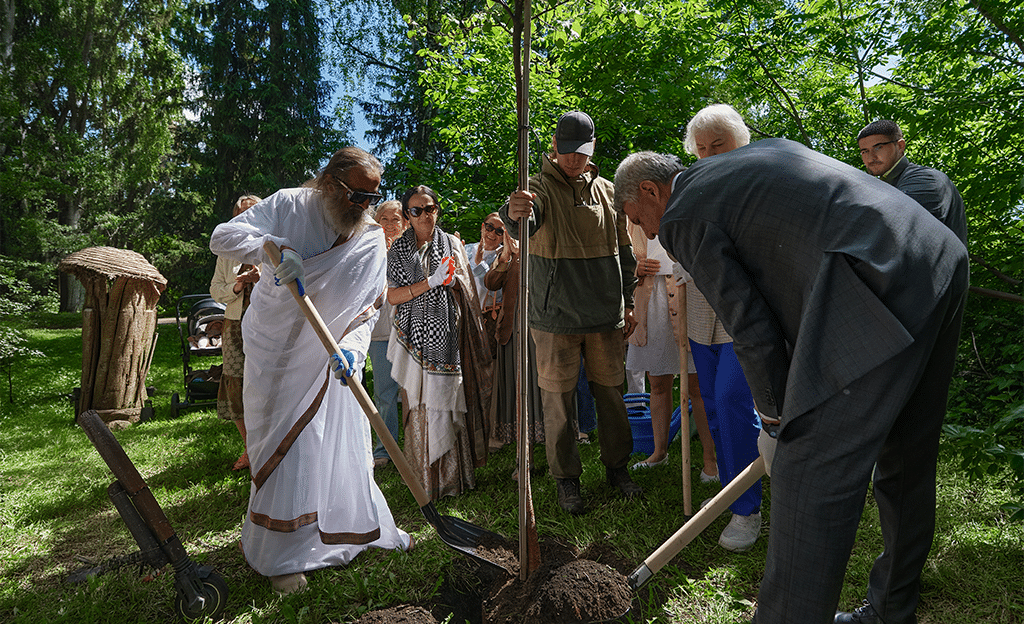
Where Consciousness Meets the World Stage: Gurudev
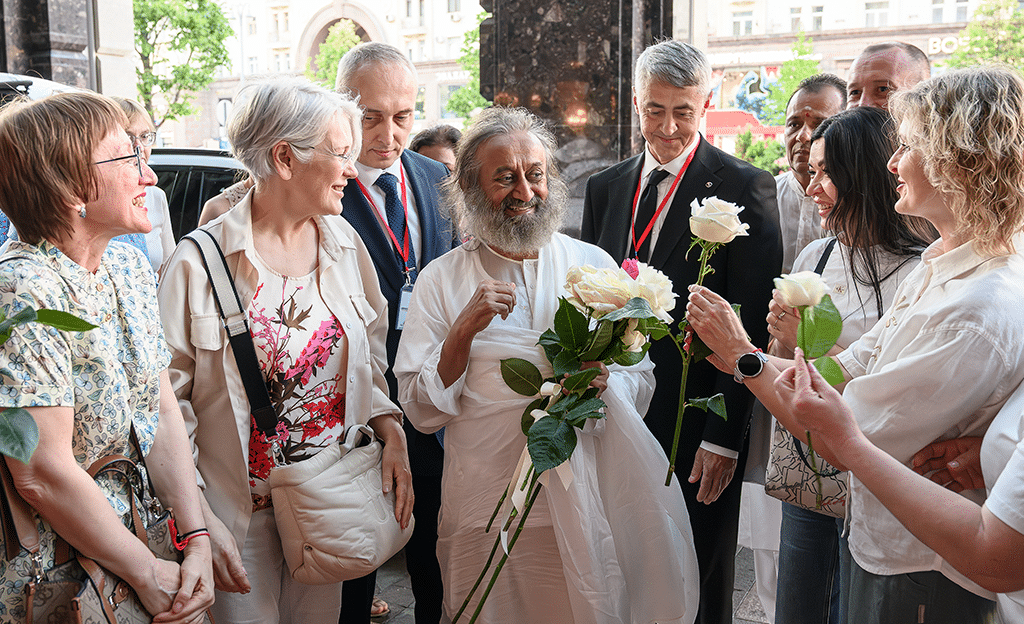
In a moment when the world is searching for new frameworks for peace, leadership, and human potential, Gurudev brought an ancient answer to a very modern stage. A three-city tour across Russia — Yekaterinburg, St. Petersburg, and Moscow — saw him in big conversations on economic dialogue, cultural exchange, and a meditation gathering that drew 1,700 people in the heart of Moscow.
June 5–7, 2026
Yekaterinburg · St. Petersburg · Moscow, Russia


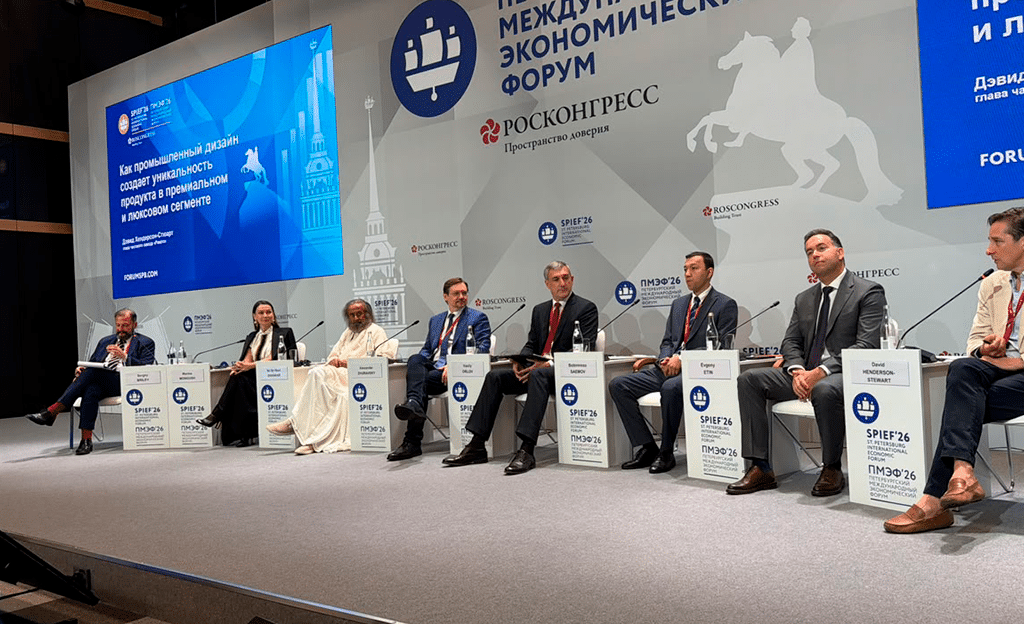
St. Petersburg International Economic Forum
One of Russia’s most prestigious global economic gatherings, SPIEF brings together heads of state, business leaders, and policymakers from across the world. Gurudev addressed two panels — on the Creative Economy and on India-Russia bilateral relations — as the sole spiritual leader at the table.

‘Distinguished Peacemaker’ Medal
On the sidelines of SPIEF, the Belarusian Peace Foundation presented Gurudev with its Distinguished Peacemaker medal in recognition of his 70th birthday and decades of conflict resolution work across Colombia, Kashmir, Ayodhya, Iraq, and Sri Lanka.

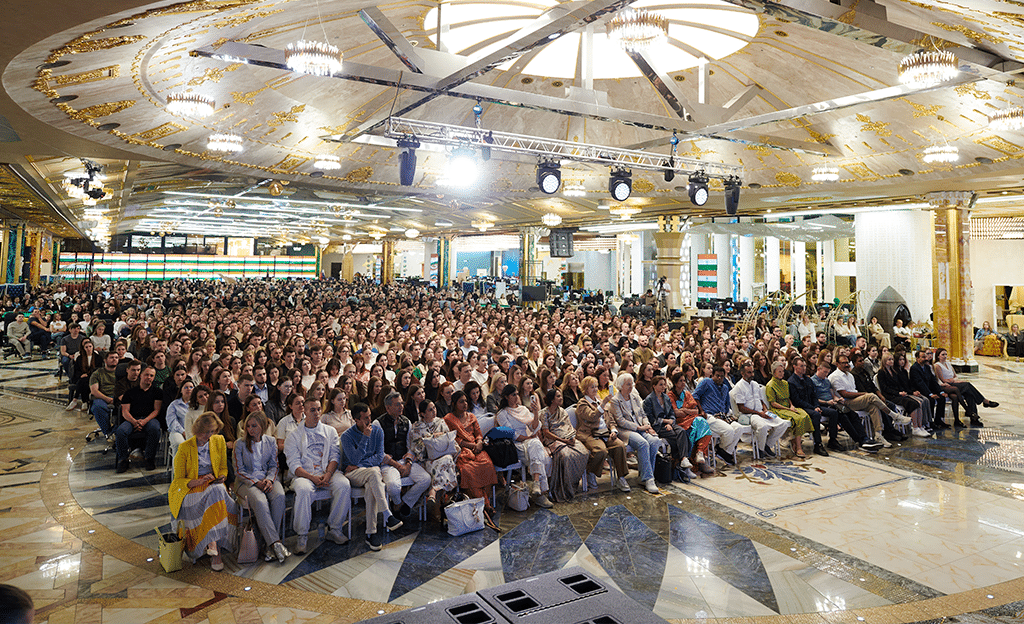
1,700 Gathered
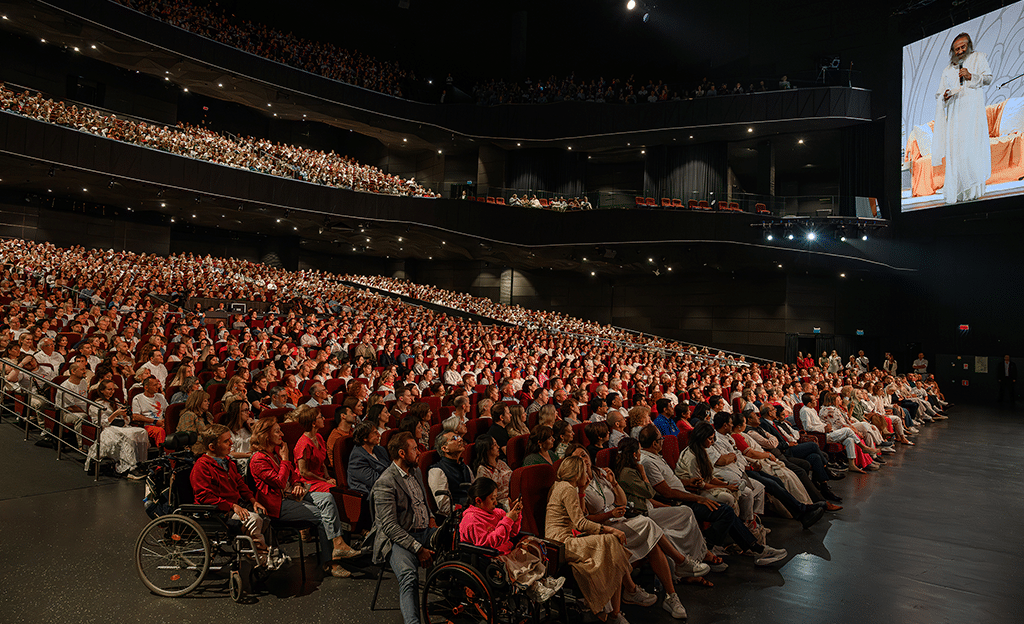
Moscow’s public event drew over 1,700 participants to an evening of teaching and meditation. Organized jointly with the Jawaharlal Nehru Cultural Centre, the event was the culmination of a week that began in Yekaterinburg and moved through St. Petersburg.

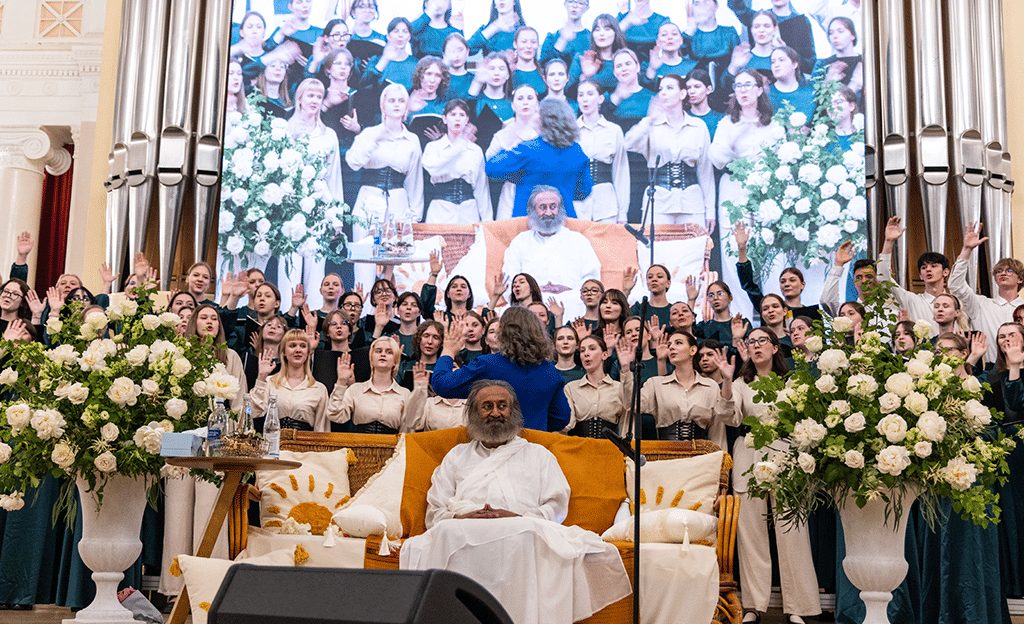
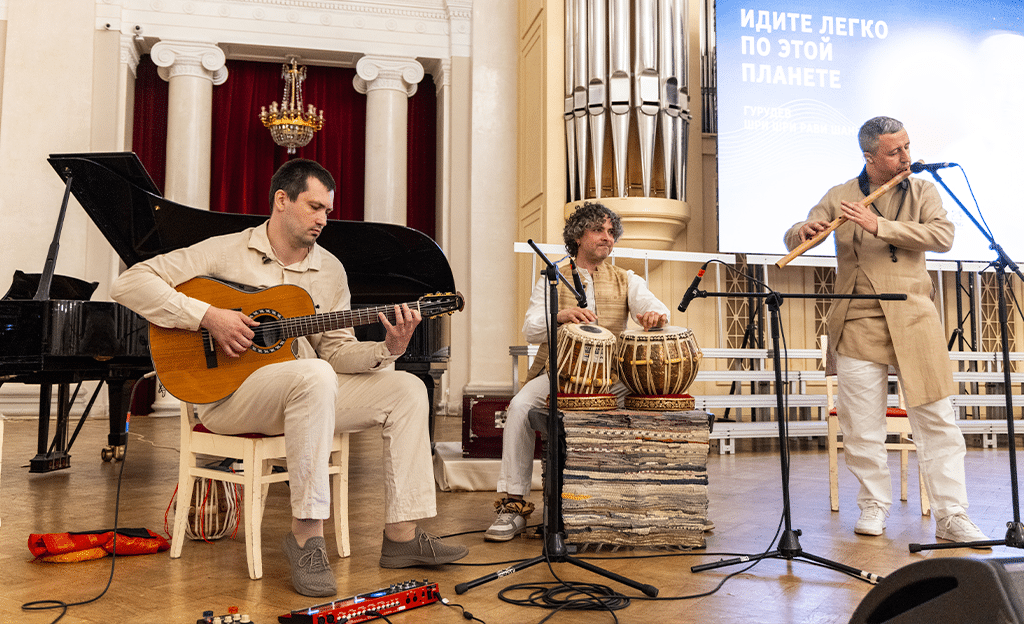
Meditation at the St. Petersburg Philharmonia
In the Grand Hall of one of Russia’s most celebrated concert venues, Gurudev led a meditation as part of an evening themed ‘The Art of Surviving Turbulent Times,’ which featured a blend of classical music and inner stillness.
The St. Petersburg International Economic Forum is not a natural venue for a spiritual teacher. That is precisely what made Gurudev’s presence there significant.
At the Creative Economy panel, he made a case for something the economic framework rarely accounts for: the role of indigenous culture and consciousness in shaping what a society produces and values. He called for creativity to be brought into sport, and for the world’s ancient artistic traditions to be elevated not as heritage artifacts, but as living forces. At the India-Russia bilateral panel, he pointed to language studies, student exchanges, Ayurveda, and cultural tourism as the deeper infrastructure of a lasting relationship between nations. “India and Russia have shared close ties for centuries,” he said in a Business Today interview on the sidelines of the forum. “Cultural tourism can become a powerful bridge.”
The distinction he draws — between the kind of collaboration that shows up in trade data and the kind that lives in people — is one Gurudev has been making for decades. At SPIEF, he was making it to an audience that moves markets.
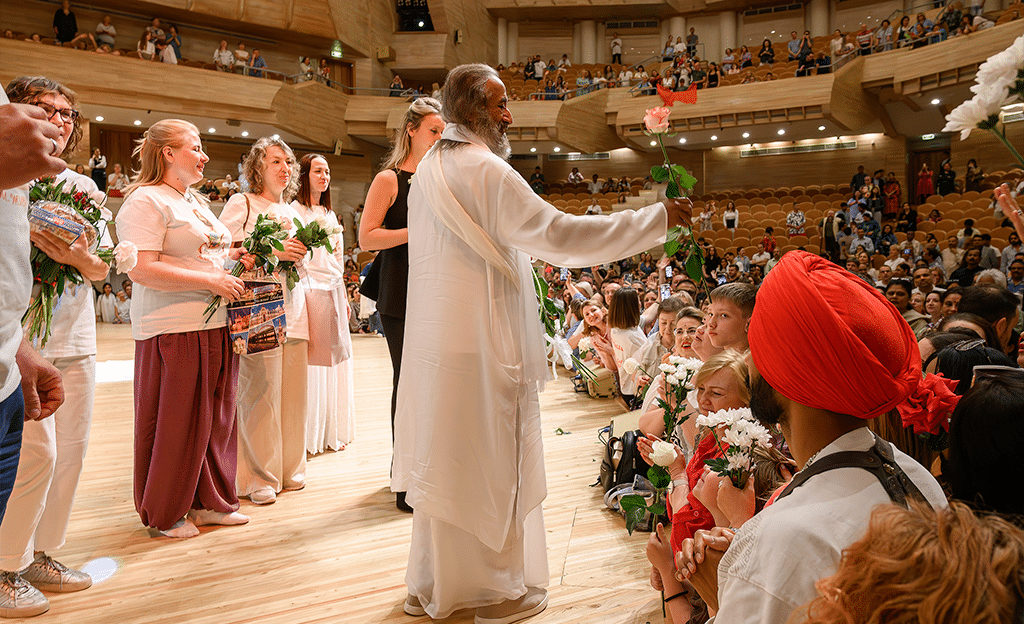
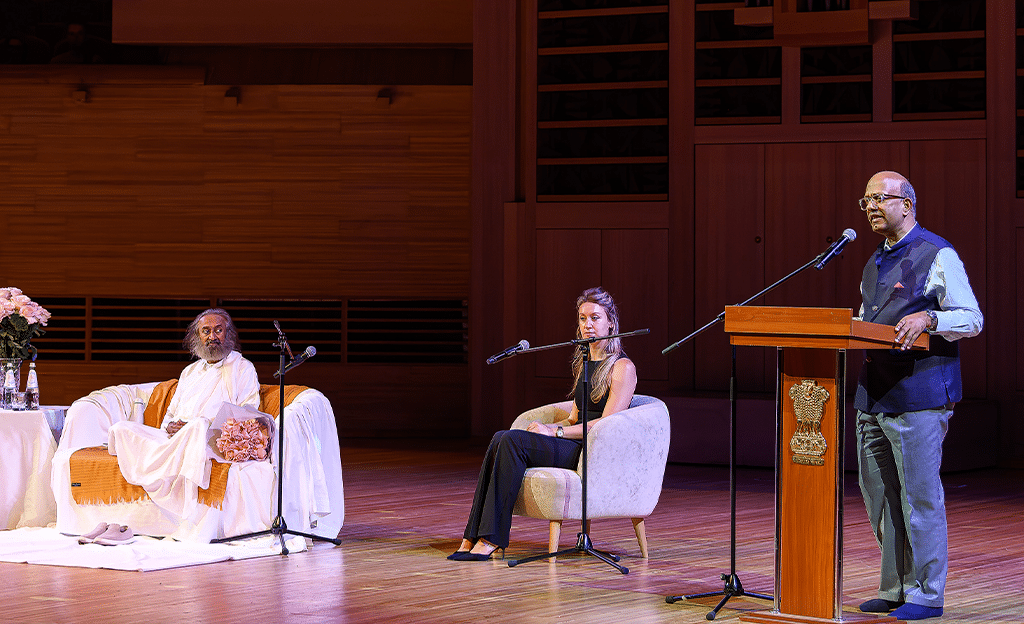
On June 7, 1,700 people filled the Moscow International House of Music for an evening that began with a welcome from H.E. Vinay Kumar, Ambassador of India to Russia, and ended with a guided meditation.
Throughout, Gurudev wove a tapestry that brought together contemporary science and ancient wisdom seamlessly.
He opened in the language of physics. The universe, he said, is not material at its core — it is vibrations. He offered COVID-19 as evidence: a virus too small to see with the naked eye, capable of stopping the world. A single atom, at Hiroshima and Nagasaki. The lesson is not about fragility, but rather the power of what is subtle.
From there he moved inward. Our emotions, he said, are vibrations. They do not stay within us. They travel through the field of consciousness that surrounds and permeates us, unseen the way water is unseen to a fish, but no less the condition of its life.
“The space around us is not empty. It is full of vibrations, life energy. And that is what causes thoughts and emotions.”
He offered a statistic that stopped the room. Only 0.03% of what exists in the universe is visible to the human eye. He used it not to diminish human knowledge but to open a door. “What you know is 0.03%. What you don’t know is much, much more.”
Then something unexpected. That same day, Gurudev had read that both President Putin and President Zelensky had signaled willingness to talk. He named it from the stage. The previous day, hundreds of people had gathered with focused positive intention. He connected the two — not as certainty, but as possibility. The idea that meditation is not a retreat from the world, but a contribution to it.
“Don’t think you have nothing to do. You all have something to contribute. When we meditate, we send calming positive ions into the atmosphere.”
He closed with a guided meditation. The hall went quiet.
On the sidelines of SPIEF, Maxim Misko, Chairman of the Belarusian Peace Foundation, presented Gurudev with the Foundation’s Distinguished Peacemaker medal. The citation was direct.
“We know well and highly value your many years of experience in peacemaking, your enormous spiritual authority and practical efforts, through which it was possible to reduce tensions in various regions of the world, prevent the escalation of conflicts and save human lives.”
The record behind those words is specific. In Colombia, Gurudev’s engagement contributed to a unilateral ceasefire by FARC and the eventual 2016 peace accords that halted a 52-year civil war. In Sri Lanka, he worked diligently to mediate between the LTTE and the government. In Ayodhya, he was appointed by India’s Supreme Court to a mediation panel that helped a 500-year dispute — one that had seen 74 wars and two million lives lost — reach a peaceful resolution accepted across communities. In many places, the work has been done with the same approach: attend not only to the external conditions of conflict, but to the mental and emotional needs of the people affected by it.
Gurudev accepted the medal and left a sentence on the record that framed everything the week had been about.
“There is no more important agenda in modern society of any country than the question of peace.”
The three cities, the economic forum, the concert hall, the embassy, the business club, the university meeting echoed a principle that Gurudev has shared since 1981: that the inner life of a human being is not separate from the outer life of the world. That consciousness is not a private matter. That what we cultivate within us — stillness, clarity, the capacity for right action — moves outward into families, institutions, economies, and the spaces between nations where conflict either takes root or doesn’t.

Continue your happiness journey with Gurudev’s highly-rated meditation app. Sattva offers guided meditations, wisdom teachings, and practical techniques to enhance your daily wellbeing.
Download Sattva App


SOLUTION